Skylights are a beautiful addition to any Southern Arizona home, flooding interior spaces with the vibrant natural light of the Sonoran Desert. For properties with flat roofs, which are incredibly common in Tucson’s architectural landscape, skylights offer a unique way to brighten dark corridors, kitchens, and living rooms without sacrificing wall space. However, on a flat coated roof system, a skylight is also a major penetration in your building’s primary protective envelope. Over time, constant exposure to intense UV radiation, extreme summer heat, and localized pooling water degrades these fixtures, turning a beautiful feature into a potential source for devastating water leaks.
When your skylight begins to show signs of age, it is crucial to address it before the next monsoon season. At Desert Sun Roofing, we specialize exclusively in flat, coated roof systems. We focus entirely on the repair of existing units (both acrylic and glass) and the professional skylight replacement of acrylic dome units on flat coated roofs. We do not cut new openings, work on pitched tile or shingle roofs, or perform initial installations on untouched roof decks. Instead, our team focuses entirely on restoring and upgrading your existing flat roof setup to ensure your home remains completely watertight, energy-efficient, and seamlessly integrated with your elastomeric roof coating.

Acrylic vs. Glass Skylights: The Realities of Flat Roof Wear in Tucson
In Tucson, the life expectancy of a skylight is significantly shorter than the structural roof deck itself, regardless of whether you have a lightweight acrylic dome or a heavy-duty tempered glass unit. The unique environmental physics of our region subject both materials to daily thermal expansion and contraction, which eventually makes a full skylight replacement or rebuild inevitable.
However, acrylic and glass fail in completely different ways, requiring distinct approaches to maintenance.
1. Acrylic Skylights (Domes)
Most older flat, coated roofs in Tucson feature acrylic domes. They are lightweight, economical, and naturally vaulted to shed water.
- Acrylic Embrittlement: The relentless desert sun bakes acrylic domes with intense UV radiation, causing the plastic to lose its essential chemical plasticizers (the compounds that keep the plastic flexible). Over time, the material becomes brittle, leading to micro-cracks, deep fracturing, or large holes when struck by blowing monsoon debris, falling branches, or desert hailstones.
- Yellowing, Clouding, and Light Loss: Severe UV exposure chemically degrades the glazing on older acrylic domes, turning them a hazy, unsightly yellow. This not only ruins your interior aesthetic but drastically reduces the amount of natural light entering your living space, signaling that the plastic is ready for a skylight replacement.
2. Glass Skylights (Flat Glass Panels)
Many modern or upgraded Tucson homes feature flat glass skylights. These are typically constructed with double-paned, tempered safety glass, often filled with argon gas for insulation. To explore the design advantages of these configurations, you can view some of the industry’s premier modern, energy-efficient flat roof skylight systems.
- Seal Failure and Condensation: The primary failure point for flat roof glass skylights is the perimeter seal holding the double panes together. Our extreme summer heat expands the air between the panes, while a sudden monsoon downpour rapidly cools the exterior glass. This massive thermal shock eventually ruptures the seal, trapping moisture between the glass panes and creating permanent, unsightly condensation and fogging.
- Thermal Stress Cracks: While tempered glass is highly impact-resistant, the extreme difference in temperature between your air-conditioned interior (75°F) and the roasting exterior glass surface (160°F+) can cause a glass panel to crack from thermal stress.
- Frame Gasket Degradation: Unlike vaulted acrylic domes, flat glass units sit relatively flush. This means dust, water, and debris collect along the bottom edge. Over time, this stagnant moisture rots the rubber gaskets sealing the glass to its metal frame, resulting in immediate leaks.

Knowing When to Repair vs. When to Choose Skylight Replacement
As a homeowner, distinguishing between a simple patch job and a necessary skylight replacement can save you thousands of dollars in secondary interior damage.
When to Repair (Acrylic or Glass)
If your skylight lens (acrylic or glass) is physically intact, clear, and free of physical cracks, any active leak you are experiencing is likely caused by deteriorated sealant or loose perimeter flashing around the mounting curb.
A professional repair involves stripping away old, cracked tar, silicone, or weathered elastomeric caulking from the base of the wood curb. Once the area is cleaned to the bare substrate, we secure any loose metal flashing and apply a heavy-duty, multi-layered rubberized flashing compound reinforced with polyester fabric. This is an essential part of routine roof repair and maintenance that can successfully restore the watertight seal of a structurally sound glass or acrylic unit without requiring a complete swap.
When a Full Skylight Replacement is Required
If the lens is visibly cracked, shattered, or severely yellowed, repair is no longer a viable option. Attempting to patch cracked plastic or failing glass seals with silicone is a temporary Band-Aid that will fail during the next heavy downpour.
In this scenario, a professional skylight replacement is the only safe option:
- For Acrylic Domes: We carefully remove the old, failing dome structure down to the wooden curb and execute a seamless skylight replacement using a modern, double-domed acrylic unit that offers superior insulation and impact resistance. Because of Tucson’s arid climate, physical wood rot on the supporting curb is relatively uncommon. However, in the rare event that we uncover hidden structural damage or severe wood decay on the curb, Desert Sun Roofing will recommend a trusted local general contractor to handle the required structural modifications before we secure your new dome.
- For Glass Units: Please note that Desert Sun Roofing does not offer glass-to-glass replacement services. If your flat glass skylight is cracked, internally fogged, or has suffered structural frame failure, we cannot replace it with another glass pane. However, we can perform a complete skylight replacement by retrofitting the opening with a premium, double-domed acrylic unit. If you prefer to keep a glass system, you will need to coordinate with a specialized glazing contractor to swap the glass panels before we seal the surrounding roof.
Understanding the Anatomy of a Coated Flat Roof Skylight
To make an informed decision about your home’s upkeep, it is helpful to understand how a skylight is physically integrated into a flat, coated roof system. Unlike pitched tile or shingle roofs where water drains away instantly, a flat roof must rely on an elevated structural assembly (the curb) to keep water from seeping into the penetrations.
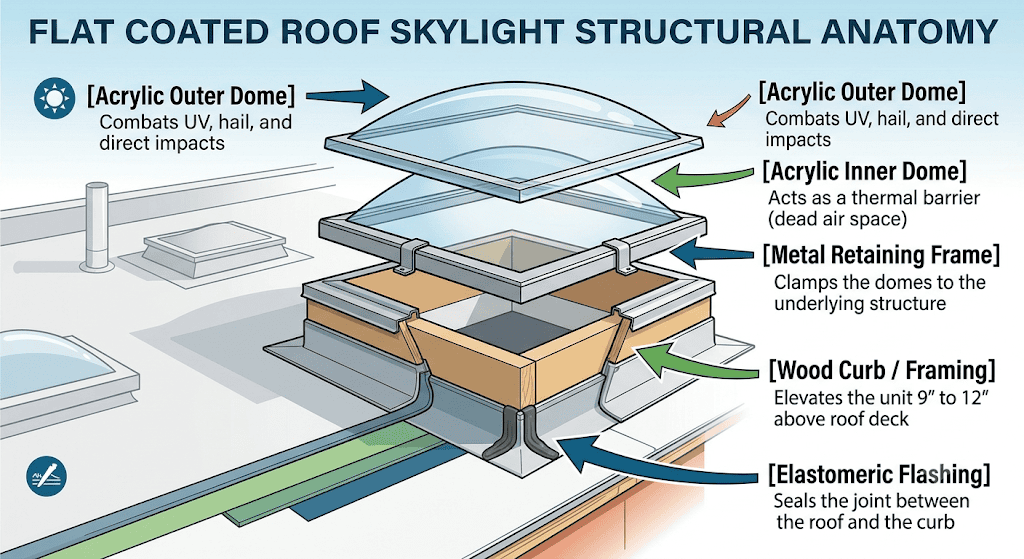
As you can see, the wood curb is the foundation of the skylight. It must be raised high enough above the flat roof surface to prevent standing water from spilling over the lip during heavy rains. While wood rot on these curbs is quite uncommon in our dry desert environment, keeping the surrounding flashing perfectly sealed is still vital to prevent slow, hidden leaks from reaching your ceiling joists. When modifying flat roof elements, structural changes must adhere closely to City of Tucson building permit requirements to ensure all systems remain fully compliant with regional codes.
The Skylight Blind Spot: Why Other Roofers Avoid Them
Skylights are notoriously tricky features on a flat roof. Because they involve mixing completely different materials, metal, acrylic or glass, wood curbs, and the elastomeric roof coating itself, they expand and contract at completely different rates than the rest of your roof deck. This makes them highly sensitive leak points that require patience and meticulous detail to seal properly.
Because of this complexity, many standard roofers outright neglect or ignore skylights during a coating project. They don’t want the liability, they don’t want the hassle, and they lack the patience required to detail these critical intersections. Instead of suggesting a necessary skylight replacement or proper repair, they will often roll their elastomeric coating right up to the edge of a failing dome or glass frame, cross their fingers, and leave you with a ticking time bomb.
At Desert Sun Roofing, we take the exact opposite approach. Owner Jeremiah Nidey has decades of hands-on experience addressing these precise skylight issues specifically on flat, coated roofs. He understands the intricate physics of flat roof penetrations and knows exactly when a unit can be saved or when a complete skylight replacement is required to protect your home. We know a flat roof coating is only as strong as its weakest seam.

Integrating Skylight Replacement with Your Roof Maintenance
In Tucson’s unforgiving climate, skylight maintenance must never be treated as an afterthought. It should be perfectly synchronized with your elastomeric roof coating schedule.
To maintain reliable weatherproofing, flat roof coatings must be professionally refreshed every 3 to 5 years. Waiting 10 to 15 years to address your roof coating or your skylight seals is a recipe for structural disaster. When older skylights are left uninspected for over a decade, water can silently bypass degraded flashings. While the dry Arizona air protects most roofs from rapid decay, prolonged moisture exposure will eventually compromise the structural wood framing surrounding the opening. If you notice a water spot on your drywall, addressing it early prevents a highly complex situation that might require hiring a general contractor for structural carpentry.
When Desert Sun Roofing services your flat roof, we inspect your existing skylights as a critical component of our comprehensive surface preparation. If an acrylic dome is structurally compromised, we recommend and perform a skylight replacement before we apply our seamless elastomeric system, locking the new skylight frame into a continuous, monolithic protective barrier.
What The Skylight Lifespan in Tucson Should Look Like:
- Year 0: Establish a solid foundation with a fresh elastomeric coating and ensure any compromised penetrations undergo a professional skylight replacement to secure a seamless, watertight seal.
- Years 1–2: Focus on monitoring. While the premium coating is doing its job reflecting intense Tucson UV rays, standard self-inspections after major summer monsoon storms help catch early wind or debris damage.
- Year 3: The critical midpoint. Arrange for a formal inspection to verify coating thickness and check vulnerable areas, such as the seals around your skylight frames and vents.
- Years 4–5: The optimal re-coat window. Applying a fresh layer of elastomeric coating now prevents wear from exposing the underlying roof deck, saving you from expensive structural repairs.
- Year 10+: The danger zone for components like acrylic skylights, which degrade from intense UV exposure and must be scheduled for a full replacement to avoid catastrophic leaks.
The Financial Impact of Neglect: Repair vs. Replacement Cost Realities
Ignoring a failing skylight on a flat roof is an incredibly expensive gamble. While a proactive skylight replacement is a straightforward, planned home improvement, a reactive replacement forced by a sudden catastrophic leak introduces several compounding expenses:
- Interior Drywall Repair: Water leaking from a skylight curb spreads horizontally along your ceiling drywall before dripping onto your floor. Repairing, texturing, and painting water-damaged ceilings can easily add hundreds of dollars to your overall repair bill.
- Structural Wood Rot: Once water gets into the wood curb framing, it cannot escape easily. The wood will soften and rot, compromising the structural strength of your ceiling opening. Rebuilding a rotted structural curb is far more labor-intensive than a standard dome swap.
- Mold Remediation: The dark, warm space between your drywall and your roof deck is a breeding ground for mold when moisture is introduced. Remediation requires specialized equipment, wall removal, and significant expense.
By being proactive and opting for a timely skylight replacement when your acrylic domes or glass frames show the first signs of cracking, clouding, or seal failure, you protect your home from these costly cascading issues.
Frequently Asked Questions: Flat Roof Skylight Care in Tucson
To help you make the best decision for your property, we’ve compiled the most common questions Tucson homeowners ask us about maintaining, repairing, and replacing skylights on flat, coated roofing systems.
Q: Does Desert Sun Roofing install brand-new skylights where one doesn’t exist?
A: No. We do not cut new openings into untouched roof decks, install new framing, or handle interior drywall light shafts. Our services are strictly limited to the professional repair and skylight replacement of existing units that have failed, cracked, or begun leaking. By focusing exclusively on existing fixtures, we ensure your flat roof’s structural integrity is never compromised by invasive, untested alterations.
Q: How do I know if my flat roof skylight needs to be repaired or completely replaced?
A: It largely depends on the physical condition of the lens itself:
- Repair is ideal if the acrylic dome or glass panel is completely intact, uncracked, and clear, but water is seeping in around the edges. This usually indicates a failure of the surrounding sealant, which can be resolved through targeted flashing repairs during a routine elastomeric roof coating maintenance cycle.
- Skylight replacement is required if the acrylic dome is yellowed, brittle, cracked, or shattered. For glass units, if you see thermal stress cracks or permanent condensation fogging between the double panes, it is time for a full replacement.
Q. Do you work on skylights for shingle, tile, or metal roofs?
A: No. We are highly specialized flat roof specialists. Desert Sun Roofing only works on flat, coated roofs in Tucson, Arizona. We do not service sloped roofs, Spanish tile, asphalt shingles, or metal roofs. This narrow focus allows us to deliver unmatched expertise in the exact physics of elastomeric coatings and flat roof penetrations.
Q: Why are flat roof skylights so prone to leaking compared to pitched roofs?
A: On a sloped shingle or tile roof, gravity naturally sheds water down and away from a skylight frame. On a flat roof, water drains much slower, and minor imperfections in the roof plane can cause water to briefly pool against the skylight’s wooden curb. Additionally, because a flat roof is a monolithic system, any movement from thermal expansion and contraction puts immense physical stress on the joints where the skylight curb meets the roof deck. If these joints aren’t detailed by a highly experienced contractor, they will eventually fail and trigger a hidden emergency. If you suspect an active leak is actively damaging your ceiling, don’t wait, reach out to our emergency roof repair team immediately.
Q: Does Desert Sun Roofing offer glass skylight replacement?
A: No. While we regularly repair, seal, and coat the flashing around existing glass skylights to make them watertight, we do not offer glass-to-glass skylight replacement services. If your glass skylight is shattered or fogged internally and you want to replace it with another glass unit, you will need to hire a specialized glass glazing contractor. However, we can perform a skylight replacement by retrofitting your existing opening with a high-efficiency, double-domed acrylic unit.
Q: Why do other Tucson roofing contractors avoid dealing with skylights?
A: Many general roofing crews want to get on your roof, spray a fast layer of elastomeric coating, and move on to the next job. Dealing with skylights requires tedious detail work like scraping away decades of old tar and carefully measuring replacement domes. While other crews ignore them entirely due to leak liability, owner Jeremiah Nidey has decades of hands-on experience in flat roof leak detection and waterproofing services, making Desert Sun Roofing uniquely equipped to tackle these tricky penetrations head-on. Note that in the rare event that wood rot is found on the curb, we will recommend a general contractor to handle the necessary structural repairs before we install your new dome.
Q: Is a building permit required for a simple flat roof skylight replacement?
A: If we are executing a standard “dome-only” swap on an existing, structurally sound wood curb, it is typically classified as a minor repair and maintenance project that does not require a structural building permit. However, if the wood curb has suffered rare, extensive water rot and requires structural rebuilding, you will need to coordinate with a general contractor to handle those permitted structural framing changes. You can verify local rules directly through the City of Tucson Planning & Development Services portal.
Trust Tucson’s Dedicated Flat Roof Specialists
When it comes to protecting the integrity of your home, you deserve a contractor with a proven track record of honesty and specialized skill. At Desert Sun Roofing, we don’t believe in cutting corners or selling services you don’t need. Our focus is narrow, highly refined, and absolute: we only protect flat, coated roofs, and we make sure existing roof penetrations are completely secure through expert repair and acrylic skylight replacement.
Our business has proudly served the Tucson community since 2007. We never use third-party subcontractors, casual day laborers, or pushy sales reps. When you work with us, you work directly with our owner, Jeremiah Nidey. Jeremiah brings nearly two decades of local flat roofing experience to every job site and is personally present on every project to ensure our strict quality standards are met. This hands-on commitment to excellence has earned us an immaculate reputation, highlighted by a perfect 100% 5-star review record on both Google and the Better Business Bureau since 2007.
If your flat roof’s existing skylights are looking clouded, showing signs of wear, condensation, or actively leaking, don’t wait for the next storm to test them. Contact Desert Sun Roofing today to schedule a thorough evaluation of your flat roof and find out if a professional acrylic skylight replacement or target repair is the right choice to protect your home.
Consumer Pro Tip: As a savvy consumer, you should always take the time to check out the track record of any roofing contractor you are considering. To protect your property, ensure they have a completely clean record with the state by utilizing the official Arizona Registrar of Contractors license search, verify that they carry the proper license scope for roofing (CR-42), and always check their license issue date to ensure you are dealing with an established professional you can truly trust.